Grosstraktor
- Militaryhistory

- 23. Feb. 2020
- 2 Min. Lesezeit

Grosstraktor (large tractor) was the secret name of a German tank prototype which was developed during the Weimar Republic. It was together with the Leichttraktor (light tractor) the first German tank vehicles that were developed after WW1. After the Treaty of Versailles the German Empire was not allowed to own any armoured forces. In order to circumvent this prohibition, some arms manufacturer founded regional offices in other countries. In Germany the German General Staff coordinated the development of tanks. The companies Rheinmetall, Krupp and Daimler Benz received an order to develop a Versuchspanzer (try tank) of the 20t class. All three of these companies produced two prototypes of soft steel which were given the name Grosstraktor to prevent that the allies find out about the project. These tanks were tested together with the Red Army because of the military cooperation with the Soviet Union in the Kama Tank School. After the end of this cooperation during the seizure of power of the National Socialist government the tanks were brought back to the German Empire, where they were used in the early years as exercise vehicle. But they were not very suitable for this job and got discarded in 1937. The tests were very important for the engineers because they could gain many experience that were needed for the further tank cunstructions.
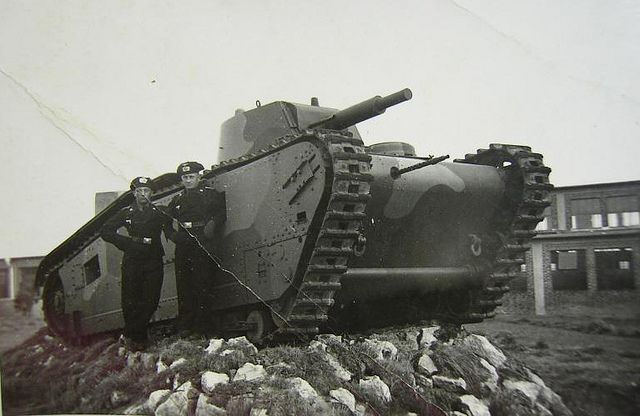
important facts:
type: medium tank
place of origin: Weimar Republic
in service: 1935
used by: Weimar Republic, Third Reich
wars: none
developed: 1926
manufacturer: Rheinmetall, Krupp, Daimler
produced: 1928-1930
numbers built: 6
technical facts:
mass: 19t
length: 6.6m
width: 2.81m
height: 2.3m
crew: 6
armour: 13 mm mild steel
main weapon: 75mm KwK L24
engine: BMW Va 6-cylinder 250PS
suspension: coil-spring suspension (Reinmetall, Krupp), leaf springs suspension (Daimler)
operational range: 150km on-road
speed: 40km/h on-road

Kommentare